
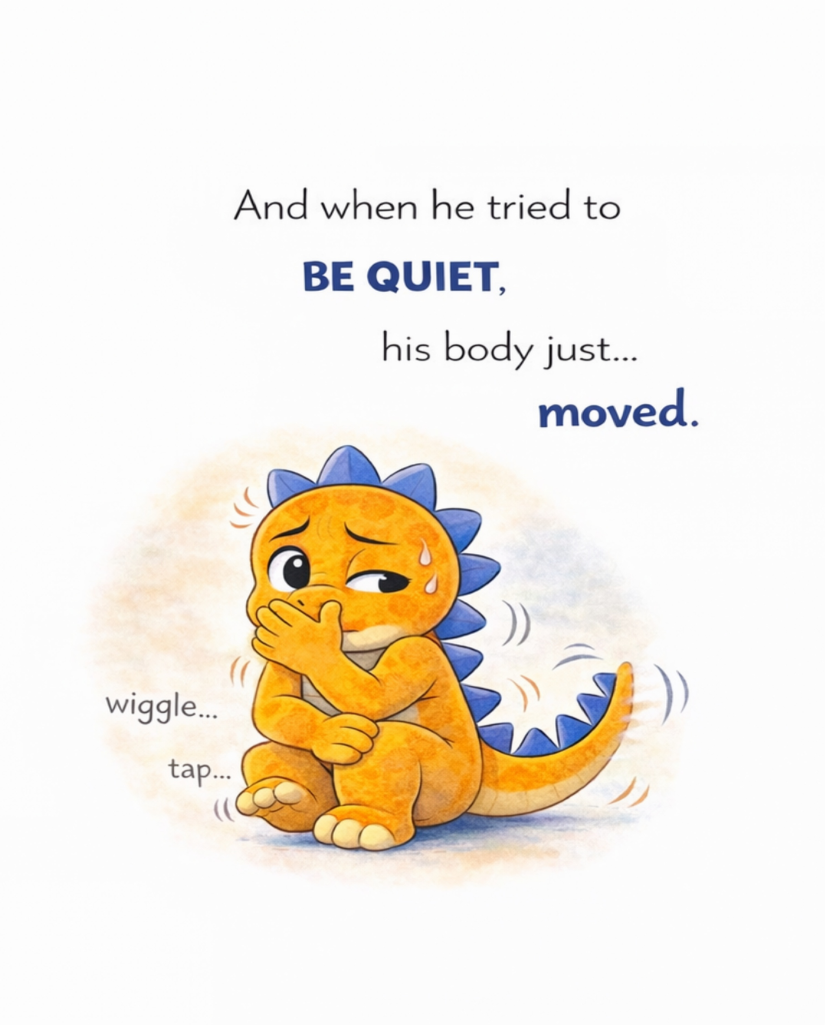
Page 1 — The Struggle
"And when he tried to BE QUIET, his body just… moved."
Wiggle. Tap. Bounce. Ronald is doing his best. The rules just don't fit how his body works.
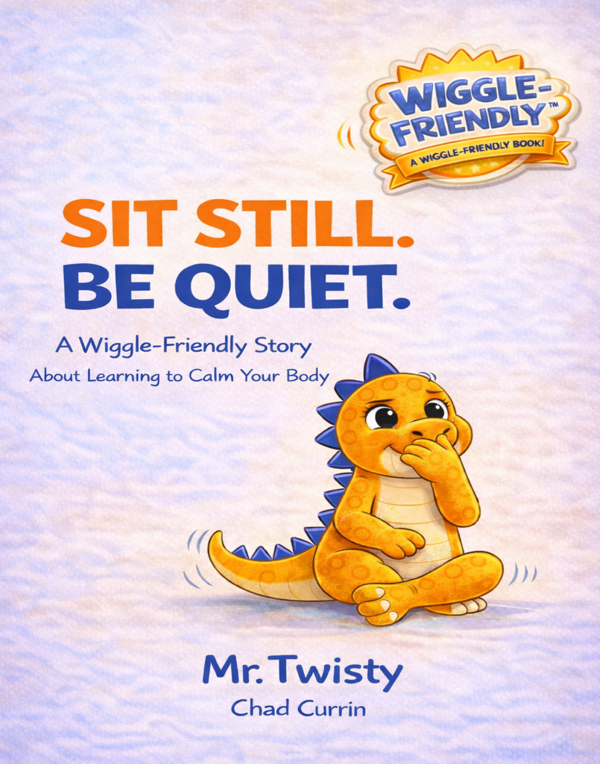
A picture book for the kid who just can't sit still — and the teachers, parents, librarians, and therapists who love them. Ronald the dinosaur learns the secret that took the author 45+ years to figure out: sometimes, before you can sit still and be quiet, you need to move first.
 Out Now!
Whether you're a kindergarten teacher, a parent at the end of your rope, a children's librarian, an OT, a school counselor, a camp counselor, or a homeschool family — this book gives you a shared language for what you're already noticing about your kid.
A circle-time read-aloud and a transition that brings little bodies back together.
For Preschool Teachers →K–3 read-aloud + a 90-second movement break. CASEL & Zones aligned.
For Elementary Teachers →A Tier 1 launch text for self-regulation lessons, small groups, and counselor pushes.
For Social Workers →A predictable, repetitive text with strong refrains — great for fluency & engagement.
For Reading Teachers →A storytime read-aloud that quiets the room — by letting it move first.
For Librarians →Your kid isn’t broken. They’re a Ronald — and there’s a way through.
For Parents →The same rule everywhere he goes. The library. The doctor's office. The classroom test. Sit still. Be quiet. And every time he tries, his body just… moves.
Wiggle. Tap. Bounce. Ronald is doing his best. The rules just don't fit how his body works.
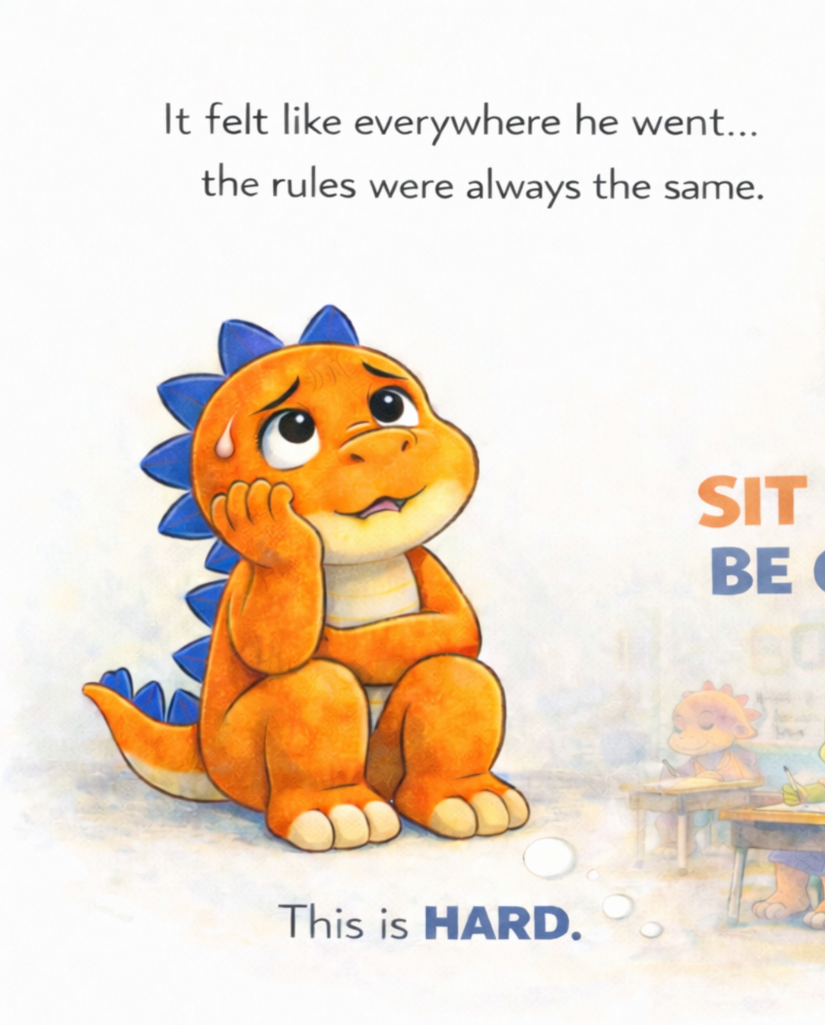
Not a behavior problem. A regulation problem. The book names what kids feel and adults rarely say out loud.
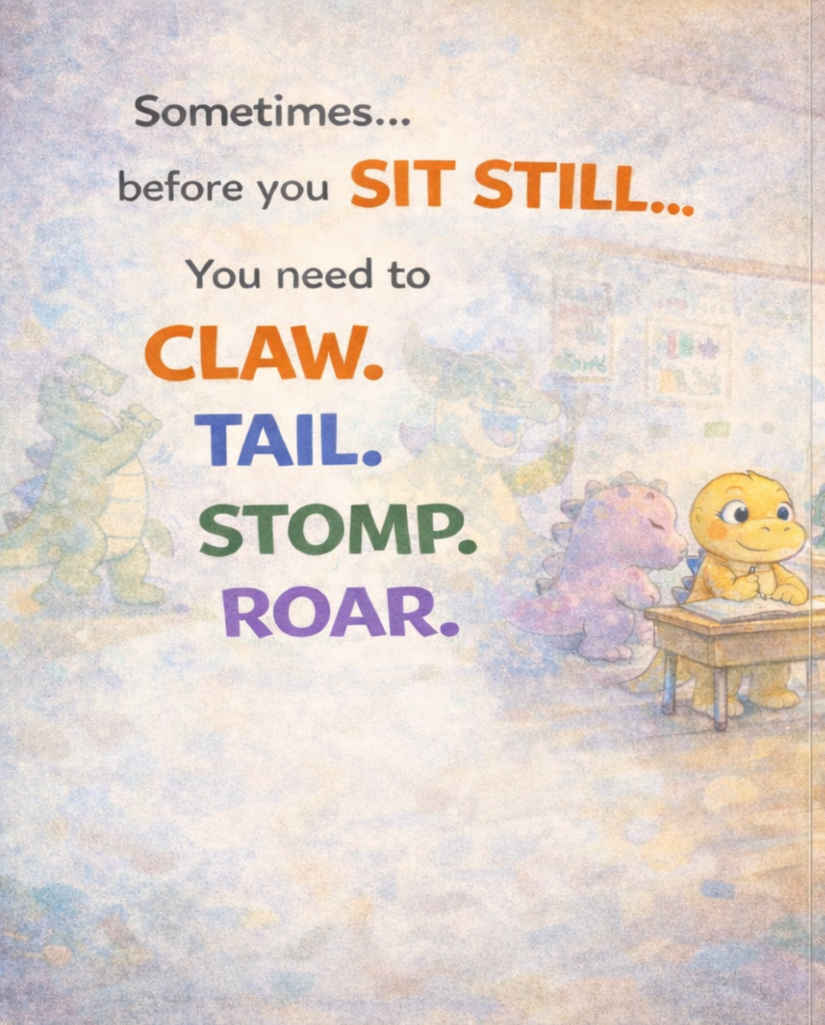
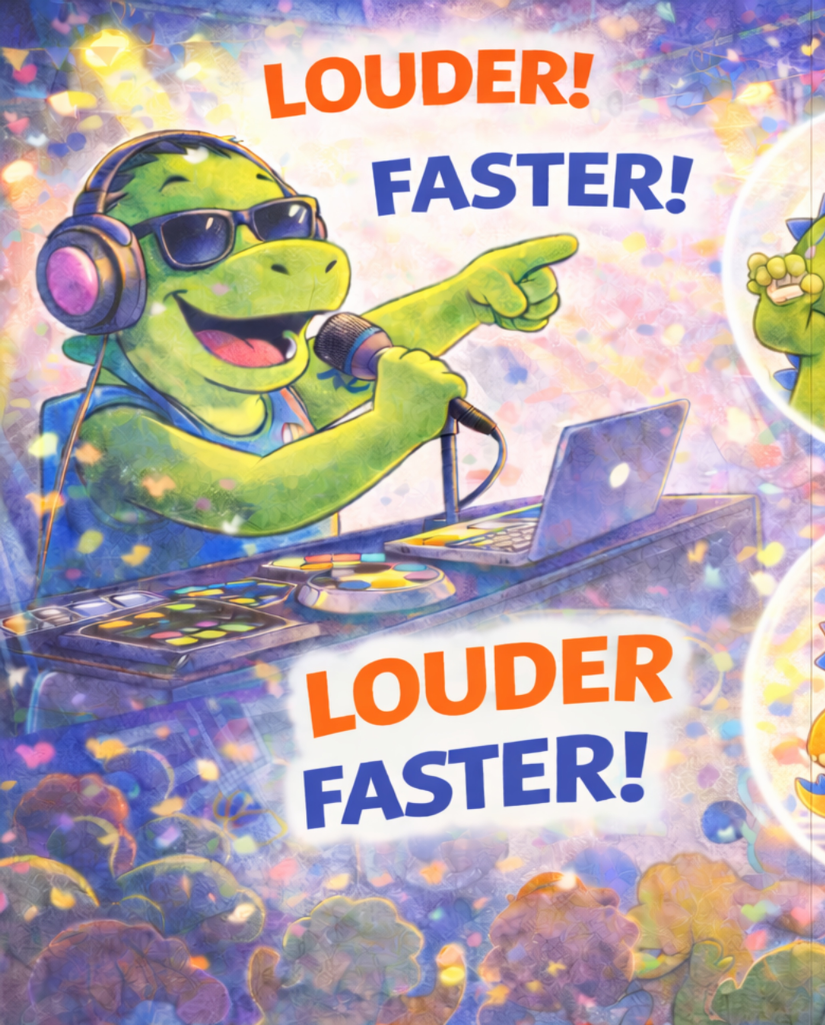
The Dinosaur Stomp arrives at the school dance. Loud and fast. Then a freeze. And then — quiet, on purpose.
The book pairs a story kids see themselves in with an activity adults can actually lead. It's not a curriculum. It's a doorway — to language, regulation, and a few minutes of breathing room.
Kids learn to notice their own energy levels and what helps them shift gears — the heart of CASEL self-management.
A safe, playful "activate then settle" arc — proprioceptive input the way OTs already use it, just in a story bodies remember.
Replaces shame ("why can't I sit still?") with understanding ("oh — my body needs to move first"). Kids feel seen.
Built-in call-and-response moments. A two-minute movement break with no materials needed. Use it before circle, before a test, before bed.
"Behind every wiggle is a chance to learn."
Mr. Twisty leading an elementary school assembly through the same activity that ends the book. Watch what "louder, faster — freeze" actually does to a room.
A two-minute, no-materials movement break tucked inside the book. Louder and faster, faster and louder… then everybody freezes. Use it before circle time, before a test, between subjects, or any time bodies need a reset. Free for teachers, librarians, and families to use.
See the activity guide Listen to the songRepeat. Faster. Louder. Freeze.
Chad Currin — known to thousands of kids as Mr. Twisty — has spent 45+ years as a magician, storyteller, and children's entertainer. He performs school assemblies, library programs, and the YouTube series Mr. Twisty's Storytime Adventures. He's also the creator of Twisty Town.
He had no shortage of teachers tell him to sit still and be quiet as a kid. This book is the secret it took him a lifetime to figure out — and a few minutes to teach a kid.
More about Mr. TwistyIt's not a clinical book and it's not a diagnosis tool. It's a picture book that affirms kids whose bodies run hot — including many kids with ADHD, sensory processing differences, autism, or just a lot of uncomplicated childhood energy. Lots of families and educators use it for ADHD-related conversations, and it works without ever using the word.
It makes some things easier — naming what's happening, normalizing big energy, giving everyone the same word for "I need to move first." It won't fix every meltdown or replace IEPs, OT, or therapy. What it does well: shrink the shame, expand the toolkit, and buy you a calmer two minutes.
Read-aloud strong for ages 3–8. Independent readers ages 6–9 enjoy it solo. Teachers use it K–3. Older siblings often listen in. Parents read it for themselves more than they expect to.
Two minutes, no materials, ends in a freeze. Most teachers run it as a transition before they need quiet (before a test, before story time, after recess). The structure is the point — a contained burst and a clean stop. See the full activity guide.
It's a Tier 1 universal support that pairs naturally with the Zones (yellow → green), CASEL self-management, and ASCA Mindsets & Behaviors. Counselors and OTs use it as a launch text. Full alignment notes for teachers →
Amazon (Kindle & paperback), Walmart, ThriftBooks, and your favorite indie via IngramSpark. All buy links here.
Hardcover-quality paperback, Kindle edition, and read-aloud-ready. In your hands in two days from Amazon — or grab it gently used from ThriftBooks.
See all buy options