
Predictable text, strong refrains, and a built-in reset for the wandering reader.
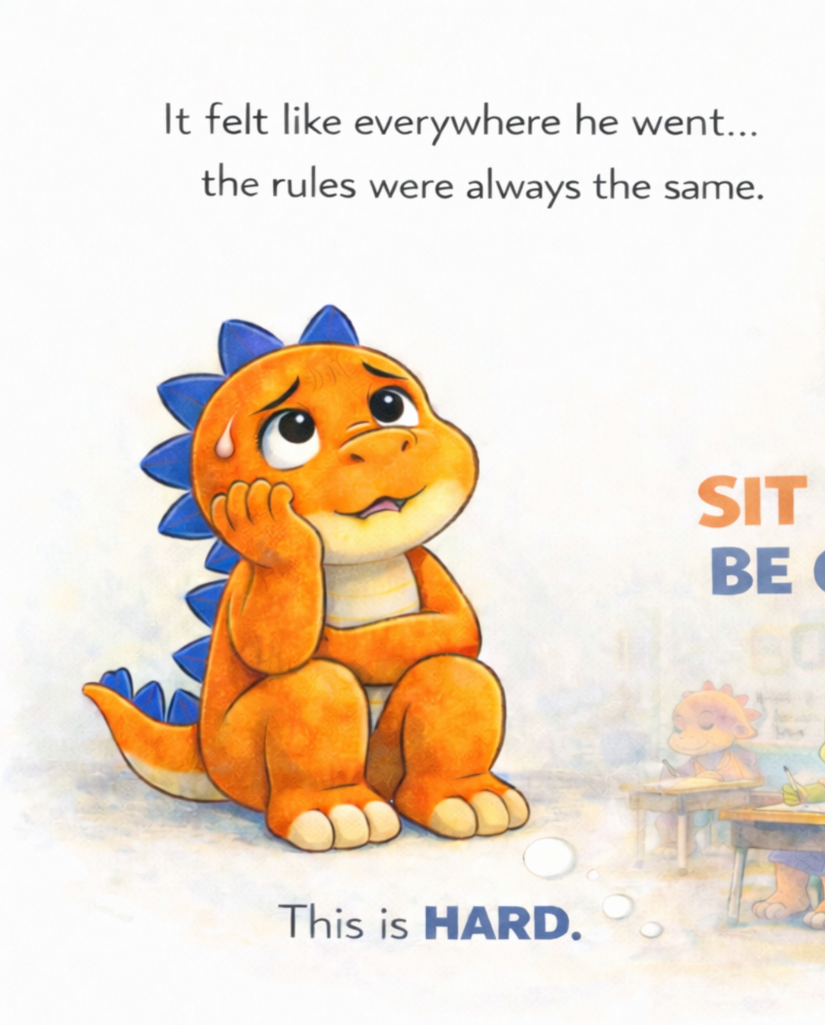
You already know that the kid who can't sit still in your reading group isn't being defiant — they're running out of regulation. Sit Still. Be Quiet. is a read-aloud built for fluency and engagement, with a body-based break tucked inside that buys you the next ten minutes of focus.
Built for the way kids actually attend.
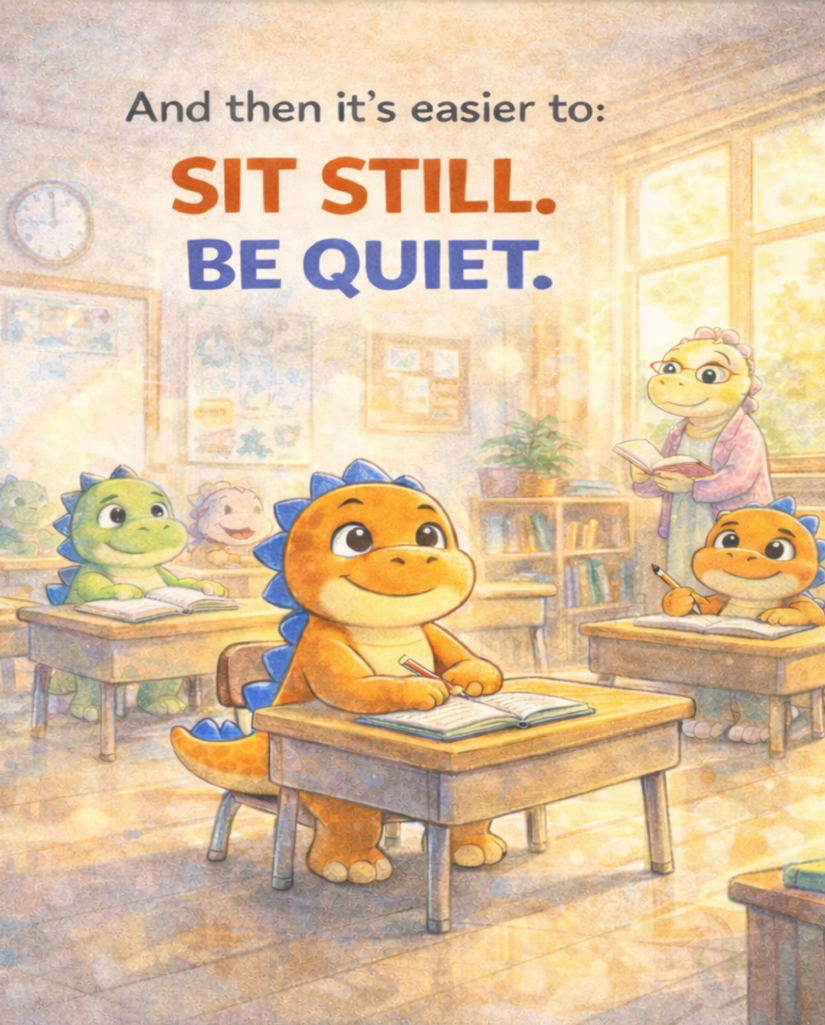
- Predictable, repetitive structure. The "Sit still. Be quiet." refrain repeats across settings. Kids start chiming in by the second occurrence — supports prosodic reading and oral fluency.
- Bold typography for expressive read-aloud. Big, varied type sizes signal volume and emphasis cues, modeling expressive prosody.
- Strong onomatopoeia and action words. WIGGLE. TAP. STOMP. ROAR. — high-utility words for emergent readers.
- One line per spread (mostly). Low text density supports comprehension for emergent readers and English learners.
- The activity is a regulation reset. A 60-second Dinosaur Stomp mid-block can salvage a small group that's losing focus.
Six ways to use it in your reading work this week.
Shared reading / fluency modeling
Read with exaggerated expression. Pause on the bold typography. Invite kids to echo-read the refrains.
Repeated reading
A second read on a different day. The predictable structure makes this low-risk and high-success.
Vocabulary launch
"Wiggle." "Tap." "Stomp." "Roar." High-utility action words; pair with kids' own bodies.
Mid-block reset
When the small group is losing it, run the Dinosaur Stomp. 90 seconds. Then back to the text.
Read-aloud + writing prompt
"Where do you feel like a Ronald?" — invites personal narrative writing.
Family-engagement / take-home
Send a one-page Dinosaur Stomp guide home with reading logs.
It's often regulation, not motivation.
Reading specialists are often the first adults to notice that a kid's reading struggle is actually a regulation struggle. This book gives you a way to talk about it without labeling — and a tool to offer the classroom teacher who sent them.
For students with attention or sensory profiles (formally identified or not), the activate-then-settle arc inside the book mirrors what an OT or counselor would recommend: get the body what it needs before asking the brain to work harder.
For your alignment notes.
Science of Reading-friendly
Predictable structure supports fluency development without becoming "guess from picture cues" — text is short, decodable-friendly, supports prosody work.
CASEL self-management
The activity directly teaches a self-regulation strategy kids can name and use during independent reading.
UDL
Multiple means of engagement (story + movement) and representation (text + bold type + illustration). Accessible to ELs and kids with attention differences.
MTSS — Tier 1
A universal classroom resource that lowers the barrier for kids who need extra regulation support.